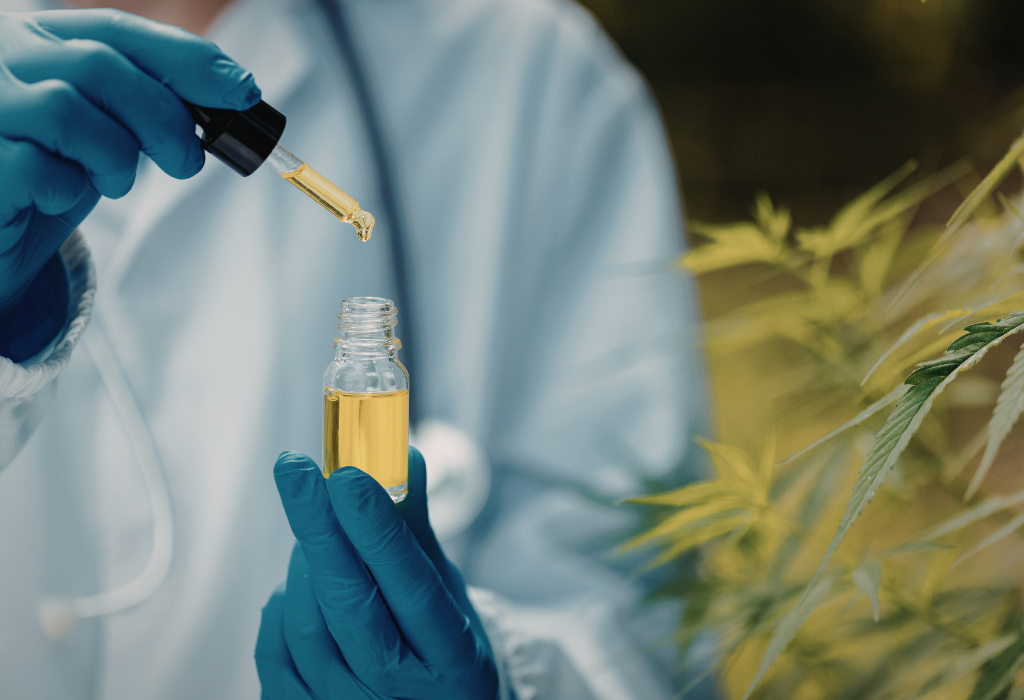
New Scientific Research Uncovers the Potential of Cannabis Flavonoids in Cancer Studies
While scientific research into cannabis primarily focuses on major cannabinoids such as CBD and THC, secondary plant compounds also hold significant medical interest. A report by Business of Cannabis details preliminary laboratory findings from Standard Seed Corporation (SSC) regarding a natural compound from cannabis that successfully stopped cancer cell growth in early lab tests.
Understanding Cannflavin A and AI Science
The study focuses on Cannflavin A, a member of a plant chemical group known as flavonoids. Unlike cannabinoids, flavonoids are found throughout many plants, fruits, and vegetables, but their specific role in cannabis has received limited scientific attention since its initial isolation in 1980.
Before conducting physical laboratory tests, researchers used an artificial intelligence platform called the Botanical AI Factory. The computer model simulated how the compound would behave inside human cells, predicting that Cannflavin A latches onto a specific protein (RSK2) that tumor cells use to signal growth and division.
Initial Laboratory Test Results
When tested against human cancer cell lines from the National Cancer Institute, the physical laboratory tests matched the computer's predictions. At a fixed test concentration, the compound demonstrated strong results in stopping cell multiplication:
Leukemia (Blood Cancer): Stopped up to 98.89% of cell growth in aggressive blood cancer lines.
Glioblastoma (Brain Cancer): Stopped 95.7% of cell growth in an aggressive brain cancer line.
Solid Tumors: Reduced cell growth in lung (72.4%), breast (65.87%), ovarian, kidney, and prostate cancer cell lines.
Advancing the Entourage Effect
Standard pharmaceutical development usually relies on a single synthetic chemical. However, natural plant medicines often work through several compounds functioning together as a team—a concept known as the entourage effect. Studying these complex combinations was historically too expensive and difficult. Modern computer modeling allows scientists to evaluate complete, naturally occurring plant mixtures rather than focusing only on isolated single molecules.
Current Research Context
These initial tests were performed strictly on isolated cells in laboratory dishes, not in animal models or living human patients. Additionally, the data has not yet undergone formal peer review. While these early laboratory results identify a promising natural compound for further study, extensive further research is required to evaluate safety, dosage, and real-world effectiveness.
Source: Based on reporting by Ben Stevens for Business of Cannabis.