Is the EU ready to recognize the whole plant and move to a 1% THC threshold?
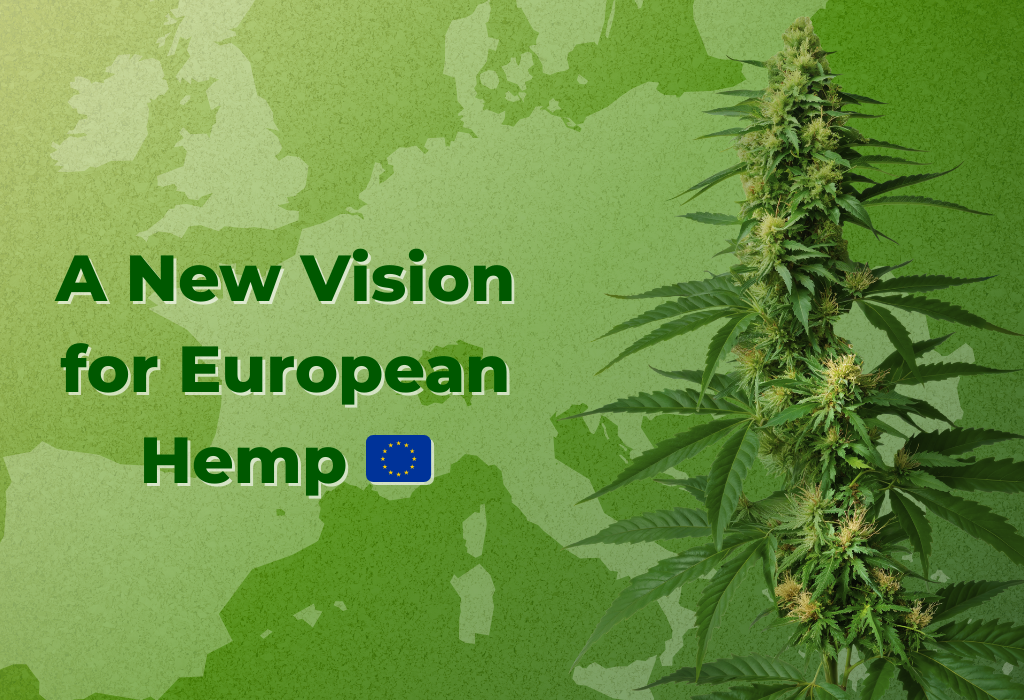
The European hemp industry stands at a potential turning point. Following years of advocacy from the European Industrial Hemp Association (EIHA), a landmark proposal from the European Commission is currently under review that could finally modernize the regulatory framework for one of Europe's most sustainable crops.
As part of the ongoing Common Agricultural Policy (CAP) 2028-2032 review, legislators are debating a fundamental shift: moving away from restrictive, outdated definitions and toward a science-based approach that reflects the agronomic and economic realities of the 21st century.
The Proposal: Formalizing "Whole-Plant" Recognition
The centerpiece of the Commission’s proposal is a long-awaited clarification: that all parts of the hemp plant—including leaves and flowers—should be formally recognized within the EU agricultural framework.
Currently, the industry operates in a fragmented landscape where certain plant parts are treated as agricultural goods while others fall into a regulatory grey zone. This proposal aims to:
- Establish Legal Certainty: By classifying the whole plant as an agricultural raw material, the EU would end the "legal lottery" facing farmers and processors.
- Unlock Economic Potential: Farmers could finally utilize the entire harvest, maximizing income through flowers and leaves rather than just seeds and stalks.
- Standardize the Internal Market: Uniform rules would prevent Member States from applying divergent restrictions, fostering a more competitive European bio-economy.
The 1% THC Threshold: Aligning with Global Reality
In parallel with the Commission's "whole-plant" language, the EIHA is strongly advocating for a harmonized 1.0% THC threshold for industrial hemp cultivation. While the current EU limit is 0.3%, the push for 1% is driven by a need for practical, climate-resilient farming:
- Protecting Against "Climate Spikes": Rising global temperatures and UV intensity can cause compliant hemp crops to naturally produce slightly higher THC levels. A 1% limit provides a necessary buffer, ensuring farmers aren't penalized for environmental factors beyond their control.
- Genetic Diversity: A higher threshold would significantly expand the EU’s varietal catalogue, allowing for the use of more robust and productive genetics currently utilized in countries like Switzerland and the USA.
- Non-Intoxicating Status: Science remains clear that industrial hemp at 1% THC is non-intoxicating. Consumer safety would continue to be protected through strict regulations on the final products.
What This Means for the Future
Hemp is a cornerstone of the European Green Deal, capable of sequestering vast amounts of carbon and providing raw materials for everything from textiles to carbon-neutral construction. However, its growth has been stunted by the lack of a coherent legal framework.
While these measures are currently proposals to be discussed by the Council and Parliament in the coming months, they represent the most significant step toward a competitive European hemp sector in decades. At CBD Seed Europe, we believe that adopting a whole-plant, 1% THC framework is not just a regulatory update—it is the essential foundation for a greener, more resilient European agriculture.