
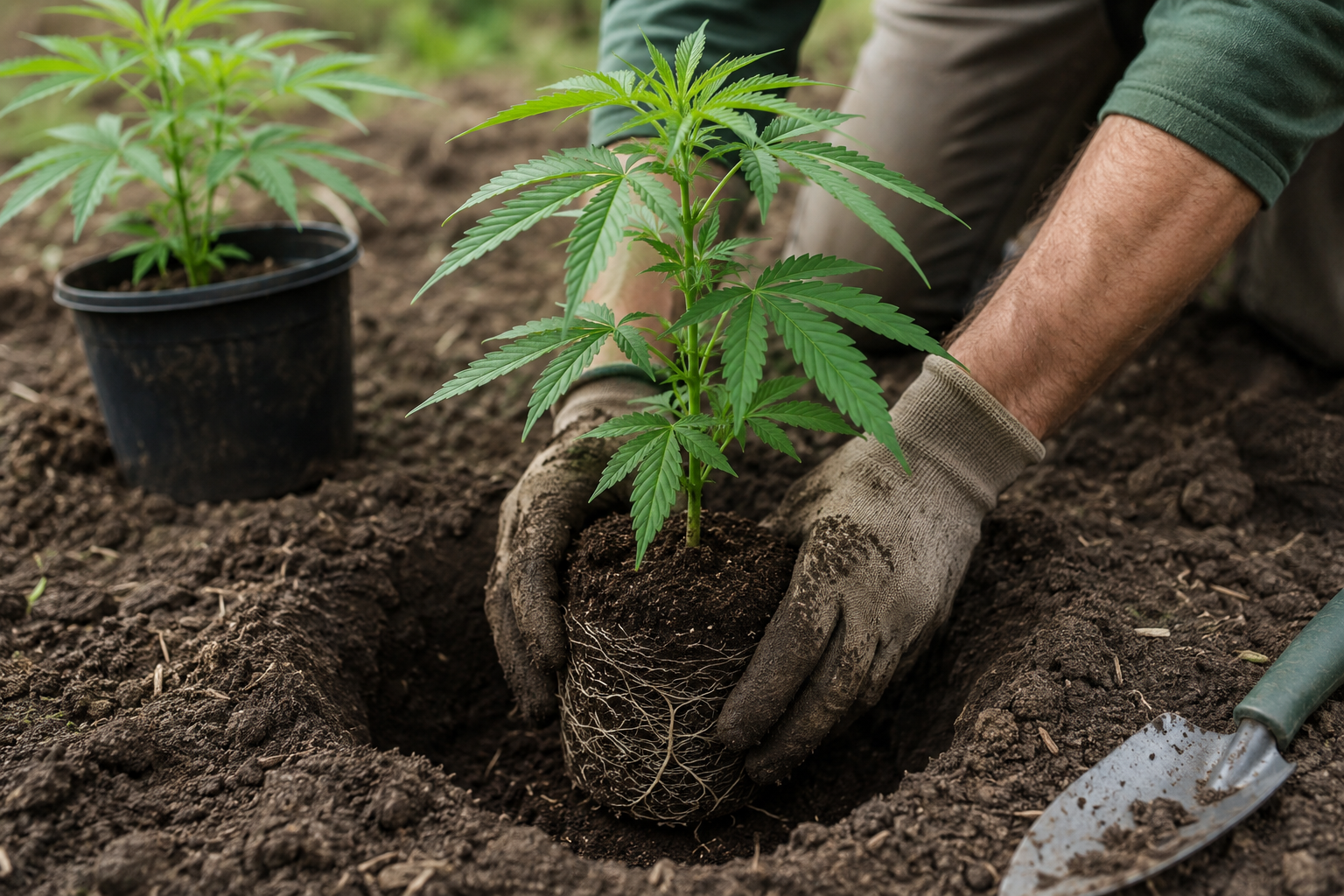
Transplanting is one of the most delicate phases in the outdoor cultivation cycle. Even vigorous seedlings can suffer setbacks if moved into the field too early, too late, or without proper acclimation.
For CBD hemp growers, successful transplanting sets the stage for explosive vegetative growth, stronger root development, and healthier flowering plants later in the season.
In this guide, we’ll cover the ideal transplant timing, hardening-off techniques, planting methods, and spacing strategies to maximize success in outdoor hemp cultivation.
Timing is everything when moving young hemp plants from propagation trays or starter containers into the soil.
The ideal transplant window occurs when seedlings have developed:
Under optimal conditions, this stage is typically reached between 10 and 14 days after germination.
Transplanting within this window offers several advantages:
Moving seedlings too early can expose fragile roots to environmental stress, while waiting too long may lead to root binding and slowed development.
Healthy young plants should appear compact, vibrant green, and structurally stable before entering the field.
Seedlings raised indoors or inside propagation environments are highly sensitive to direct sunlight, wind, fluctuating temperatures, and reduced humidity.
Without proper acclimation, plants can experience:
This process, known as “hardening off,” gradually prepares seedlings for outdoor life.
Over a period of 5 to 7 days:
This controlled transition helps strengthen:
Many experienced growers also slightly reduce watering frequency during the hardening phase. Mild water stress encourages stronger stem development and improves drought tolerance once transplanted outdoors.
The goal is to condition the plant without causing visible stress damage.
The transplanting process itself should be performed carefully and efficiently to minimize root disturbance.
Dig planting holes that closely match the size of the root ball. Oversized holes can create unstable settling, while undersized holes compress roots and restrict expansion.
Before placing the plant:
Pre-watering significantly reduces root shock and helps roots establish immediate soil contact.
When removing the seedling from its container:
Place the seedling into the hole carefully and backfill with loose soil, lightly compressing around the base to eliminate air pockets.
Avoid excessive compaction, which can reduce oxygen availability around the roots.
Immediately after transplanting, many growers apply biological stimulants such as:
These products help:
The first 72 hours after transplanting are critical for long-term plant performance.
Proper spacing directly influences:
Outdoor CBD hemp plants can become extremely large under ideal conditions, especially vigorous photoperiod cultivars.
A general recommendation is:
Spacing should be adjusted based on:
Wider spacing improves airflow and reduces mold risk in humid regions, while tighter spacing may increase efficiency in drier climates.
Although this guide focuses primarily on outdoor cultivation, many growers begin propagation indoors or run hybrid cultivation systems.
Two common indoor canopy strategies include:
Choosing the right density depends on your genetics, cultivation goals, and production model.
Successful transplanting is about reducing stress while maximizing early vigor.
By focusing on:
growers can dramatically improve field establishment and overall crop performance.
Healthy transplants create stronger root systems, more resilient plants, and ultimately higher-quality CBD flower production later in the season.
As outdoor cultivation ramps up for the 2026 season, mastering transplanting techniques can provide a major advantage throughout the entire growth cycle.
Explore premium outdoor CBD hemp genetics at CBD Seed Europe and prepare your next cultivation season with confidence.